Custom Industrial Adhesive Tape Supply
Polyimide Tape
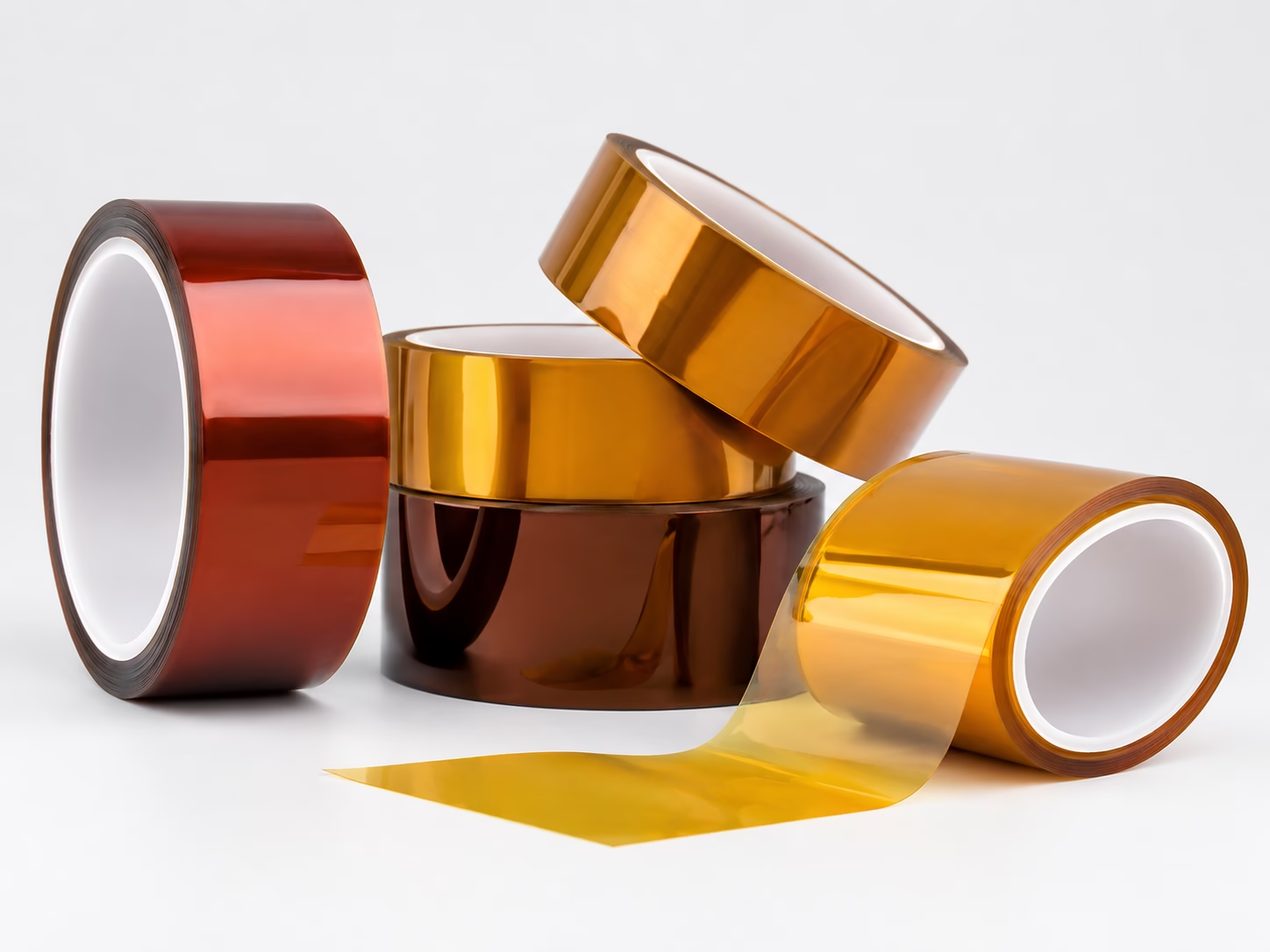
Polyimide tape uses a thin, dimensionally stable polyimide-film backing with a pressure-sensitive adhesive. Heat-resistant silicone adhesive is the usual choice for solder masking and high-temperature processing; selected acrylic, low-static, linered and double-coated constructions serve different insulation, converting and clean-handling requirements.
Guangzhou Huayun Manufacturing supplies self-wound rolls, linered material, precision slit rolls and drawing-based die-cut parts. We match the construction to the substrate, heat cycle, electrical duty and removal requirement, then prepare dimensions and packing around the approved sample or drawing.
- ✓Thin, conformable PI-film backing stays dimensionally stable during controlled heat processing.
- ✓Silicone pressure-sensitive adhesive supports accurate masking and removal after an approved cycle.
- ✓Useful dielectric, tensile, puncture and abrasion performance for compact electrical assemblies.
- ✓Available as slit rolls, rewound rolls, linered stock and drawing-based die-cut insulation parts.
What Is Polyimide Tape?
Polyimide tape is a complete adhesive construction: polyimide film provides the heat-resistant insulating carrier, while the adhesive controls wet-out, holding power and removal.
The familiar amber film is thin and conformable, with useful tensile strength, puncture resistance, dimensional stability and electrical insulation. A silicone pressure-sensitive layer is commonly used when the tape must wet out quickly, remain in place during a short thermal process and peel away afterward.
Bare-film heat resistance is not the temperature rating of a finished pressure-sensitive tape. Adhesive chemistry, coating weight, substrate, pressure, heating rate, dwell and removal temperature determine the working limit. Specialist temporary-bonding films that use a polyimide adhesive are separate materials with different lamination and release conditions.
Polyimide Tape Attributes
- Tape Type
- Single-sided polyimide-film pressure-sensitive tape is the standard format. Linered, low-static, double-coated and drawing-based converted constructions are available for selected applications.
- Backing
- Flexible polyimide film. Frequently specified film thicknesses include 0.0125, 0.025, 0.05 and 0.075 mm; 0.10 and 0.125 mm films can be reviewed for heavier constructions.
- Adhesive
- Heat-resistant silicone pressure-sensitive adhesive is standard for PCB masking and elevated-temperature work. Selected acrylic or specialist adhesive systems serve different solvent, bonding or processing requirements and must be identified separately.
- Color
- Translucent amber or gold is standard. Black, low-static and other functional versions are available for selected constructions; appearance does not establish temperature, electrical or cleanliness performance.
- Total Thickness
- Common finished-tape references span approximately 0.03–0.18 mm, including 0.055, 0.06, 0.08, 0.10 and 0.12 mm. Film thickness and total tape thickness should always be stated separately.
- Finished Width
- Common slit-width references are approximately 3–500 mm. Wider master material or very narrow rolls require separate review; tolerance depends on width, thickness, liner and conversion method.
- Roll Length
- 20 and 33 m are common references for many industrial grades. Selected constructions can be supplied in 50, 66, 100 m or custom lengths after roll diameter, splice and winding limits are confirmed.
- Core and Winding
- 76 mm paper or plastic cores are common; 25 and 38 mm cores can be reviewed. State adhesive side in or out, unwind direction, maximum roll OD, splice allowance and label orientation.
- Temperature Profile
- Published electrical grades commonly show normal service around 160–180°C. Selected silicone-adhesive masking constructions are used from about −73°C through controlled short peaks up to approximately 260°C. Continuous duty, peak dwell and cycle count require separate approval.
- Adhesion to Steel
- About 3–9 N/25 mm covers a useful range of published single-sided examples. Peel values are not interchangeable unless substrate preparation, dwell, angle, speed and test method are the same.
- Tensile Strength
- Published examples range roughly from 110 to 330 N/25 mm as film thickness and test method change. The approved model value—not a family range—should be used for design or incoming inspection.
- Elongation at Break
- Approximately 35–90% appears across common constructions. Film grade, thickness, machine direction and test procedure affect the result.
- Dielectric Strength
- Approximately 5–13 kV appears across selected thin and heavy tape examples. Required withstand voltage, insulation class, creepage distance and safety approval must be verified in the finished assembly.
- Electrical Surface
- Standard tape is insulating, while low-static grades are designed to reduce charge during unwind and removal. State the required surface resistance or charge behavior and where it must be measured.
- Process Resistance
- The polyimide backing offers useful heat, abrasion and chemical resistance. The finished tape must still be tested against the actual flux, solvent, electrolyte, coating or cleaning chemistry.
- Removal
- Compatible silicone-adhesive constructions can remove cleanly from many smooth surfaces. Residue, staining, ghosting and surface damage must be checked after the full heat cycle.
- Storage
- Keep rolls sealed in original packaging at approximately 16–27°C and 40–60% relative humidity, away from sunlight, heat, dust and solvent vapor. Follow the confirmed model label for shelf life and conditioning.
Polyimide Tape Custom Service
Supply can be arranged as master-width stock, narrow slit rolls, rewound rolls or converted parts. For roll material, confirm finished width, tolerance, length, core, winding direction, roll diameter and splice allowance. For die-cut parts, provide the drawing, liner, pitch, gap, pull tab and packing layout.
The adhesive must suit the actual surface. Solder mask, copper, stainless steel, aluminum, glass, painted parts and battery materials do not wet out or release in the same way. Flux, electrolyte, cleaning solvent, vacuum exposure and repeated heating may also change peel and residue.
For temporary masking, acceptance should be based on edge lift during heating and surface condition after removal. For electrical insulation, the approved construction should instead be checked against the required dielectric value, temperature class and assembly standard.
How to Select the Right Polyimide Tape
Start with the job the tape must perform, then confirm the thermal, electrical and converting details that affect that job.
Define the Duty
State whether the tape is for temporary masking, permanent insulation, holding, splicing or a die-cut barrier. Each duty places different demands on adhesion and removal.
Record the Heat Cycle
Provide normal temperature, peak temperature, time at peak, total dwell, cycle count and the temperature at which the tape will be removed.
Set Acceptance Criteria
Identify the required peel, dielectric strength, static behavior, residue limit, chemical exposure and any supporting test or compliance documents.
Choose the Delivery Format
Confirm roll or die-cut supply, finished dimensions, tolerance, core, liner, unwind direction, packing layout, quantity and repeat-order identification.
Where Is Polyimide Tape Used?
Polyimide film tape is selected when a thin construction must remain dimensionally stable through heat while providing masking, insulation, holding or protection.
PCB Solder Masking
Protecting gold fingers, edge contacts, connectors and selected board areas during wave soldering, reflow, hot-air leveling and controlled repair work.
SMT and Electronics Assembly
Temporary component holding, lead securing, shielding, insulation and linered die-cut placement where heat and dimensional control matter.
Motors, Coils and Transformers
Wrapping magnet wire, windings, terminals and leads with a thin insulating layer after temperature class and dielectric duty are verified.
Batteries and Power Devices
Insulating electrode tabs, cells, packs, capacitors, relays and switches after electrolyte compatibility, flame and electrical requirements are reviewed.
Heat Masking and Finishing
Masking holes, contacts, edges and selected metal areas during compatible powder coating, baking, plating or other thermal finishing cycles.
Splicing and Process Protection
Temporary holding, film splicing, fixture protection and die-cut isolation for sensors, heaters, laboratory equipment and selected vacuum processes.
Polyimide Tape Supply and Conversion Process
Construction, slitting, die cutting and inspection are arranged around the approved sample, dimensioned drawing and recorded process conditions.
Record the Application
Confirm substrate, surface condition, process chemistry, temperature curve, dwell, cycles, electrical duty and removal method.
Select the Construction
Choose film thickness, adhesive system, coating build, total thickness, electrical grade, color and liner for the required process.
Prepare Master Material
Control backing identity, adhesive coating, curing, appearance, thickness and master-roll winding against the agreed specification.
Slit or Die Cut
Convert master material into specified widths, lengths, cores, sheets or drawing-based parts with the required liner and layout.
Inspect and Trial
Check appearance, total thickness, slit width, winding, peel and agreed electrical or mechanical values; complete the actual heat-and-removal trial when required.
Pack and Identify
Seal material against dust and moisture, identify the specification and lot, and protect roll edges or converted parts in transit.
What Should Be Approved Before Batch Supply?
Keep the approved tape sample, test report, process record and converted-part drawing together as the repeat-order standard.
Tape and Roll Inspection
Confirm measurable construction and conversion details before material reaches production.
- Backing identity and adhesive system
- Film and total thickness
- Color and surface appearance
- Slit width and tolerance
- Roll length, core and roll OD
- Winding and splice requirement
- Peel, tensile and dielectric values
- Lot label and carton packing
Application Verification
Run the tape through the real process whenever insulation, masking quality or residue affects acceptance.
- Initial wet-out and holding
- Edge lifting or flagging
- Normal and peak temperature
- Dwell and repeated heat cycles
- Electrical withstand or charge behavior
- Removal force and film tearing
- Adhesive transfer or ghosting
- Substrate staining or damage
What Information Is Needed for a Polyimide Tape Quote?
Please send the required dimensions together with the actual processing and electrical conditions. An existing tape sample, technical data sheet, application photograph or die-cut drawing helps us compare the construction before sampling and quotation.
Polyimide Tape Buyer and Technical FAQs
Practical answers for purchasing, engineering, quality and production teams before testing or placing an order.
What is polyimide tape made from?
Standard high-temperature polyimide tape normally uses a polyimide-film backing coated with silicone pressure-sensitive adhesive. Amber is the most common color. Acrylic, double-coated, linered and specialist adhesive constructions also exist, so compare the complete tape rather than the film name alone.
What temperature can polyimide tape withstand?
Published electrical grades commonly show normal service around 160–180°C. Selected silicone-adhesive masking grades are used through controlled short peaks up to about 260°C. Continuous temperature, peak dwell, cycles, load, chemicals and removal condition must be confirmed for the exact tape.
Is polyimide tape the same as Kapton tape?
Polyimide tape is the generic material description. Kapton is a registered brand of polyimide film. A tape described as polyimide tape may use a different film and adhesive, so compare the actual data sheet, construction and approval sample instead of relying on the familiar name.
Which thicknesses are commonly available?
Common finished constructions range from about 0.03 to 0.18 mm, with 0.055, 0.06, 0.08, 0.10 and 0.12 mm frequently requested. PI-film references include 0.0125, 0.025, 0.05 and 0.075 mm. Film thickness and total tape thickness are different values.
Can width, roll length and core be customized?
Yes. Common conversion references include 3–500 mm finished widths, 20, 33, 50, 66 or 100 m lengths and 25, 38 or 76 mm cores. The exact range depends on tape thickness, liner, roll OD, winding quality and order quantity.
Will it remove without adhesive residue?
A compatible silicone-adhesive tape can remove cleanly from many smooth surfaces, but residue depends on surface energy, contamination, application pressure, time, heat, chemical exposure, cooling and removal angle. Trial the tape on the actual part before bulk use.
Can polyimide tape be used for wave soldering and PCB masking?
Yes, suitable grades are widely used to mask gold fingers, contacts and selected board areas. Confirm the soldering profile, flux chemistry, edge lift, ionic-cleanliness requirement, adhesive transfer and the temperature at which the tape will be removed.
Is it suitable for electrical insulation?
Polyimide film offers useful dielectric performance and is used around coils, transformers, motors, batteries and electronic components. Published tape examples vary widely, often around 5–13 kV depending on construction. The finished assembly still requires its own insulation-system, creepage, temperature-class and approval review.
What is low-static polyimide tape?
Low-static tape is designed to reduce charge generated during unwinding and removal. It is considered for static-sensitive electronic work. Required charge level, adhesive-side behavior, liner and cleanliness should be stated rather than assuming every amber tape has low-static performance.
How is ordinary PI tape different from a polyimide adhesive film?
Ordinary masking and insulation tape normally has a polyimide backing with silicone pressure-sensitive adhesive. A specialist polyimide adhesive film may use polyimide as the adhesive layer for temporary bonding or semiconductor processing. Their heat data, lamination method and removal behavior are not interchangeable.
Can polyimide tape be die cut?
Yes. Linered polyimide tape can be converted into tabs, discs, washers, frames, sheets and custom insulation or masking parts. Send a dimensioned drawing and mark the adhesive side, liner, pitch, gap, pull tab and packing layout.
How should the tape be applied and removed?
Clean and dry the surface, apply even pressure and avoid stretching the tape around edges. Follow the approved cooling and removal condition, then peel smoothly at a consistent angle. Uneven tension can cause tearing, edge lift or adhesive transfer.
How should polyimide tape be stored?
Leave unused rolls in the original sealed bag and carton, protected from sunlight, dust, heat and solvent vapor. Allow cold material to return to normal room conditions before opening, follow the model label for shelf life and retest aged stock before critical work.
What should we send for an accurate quotation?
At minimum, send the tape size, quantity, substrate, intended use and heat cycle. An existing sample, data sheet, application photograph or die-cut drawing will help us compare the construction and prepare a relevant trial.