Custom Engineering Plastic Sheet Supply
Polycarbonate (PC) Sheet
Polycarbonate sheet, also called PC sheet or solid polycarbonate sheet, is a transparent engineering thermoplastic valued for high impact resistance, useful optical clarity, low weight and stable performance across a broad temperature range. It is commonly selected for protective windows, machine guards, transparent covers, architectural glazing and fabricated industrial components.
Guangzhou Huayun Manufacturing can review full sheets, cut-to-size panels, drilled or routed pieces, bent parts and thermoformed components from a drawing, sample or finished-part requirement. Thickness, width and length can be customized to the order. Please confirm the PC grade, dimensions, color, light-transmission target, surface treatment, outdoor exposure, operating temperature, tolerance, quantity and packing before quotation.
- ✓Common solid-sheet reference: 2–10 mm thick and 1220, 1560, 1820 or 2100 mm wide; other dimensions can be reviewed to order.
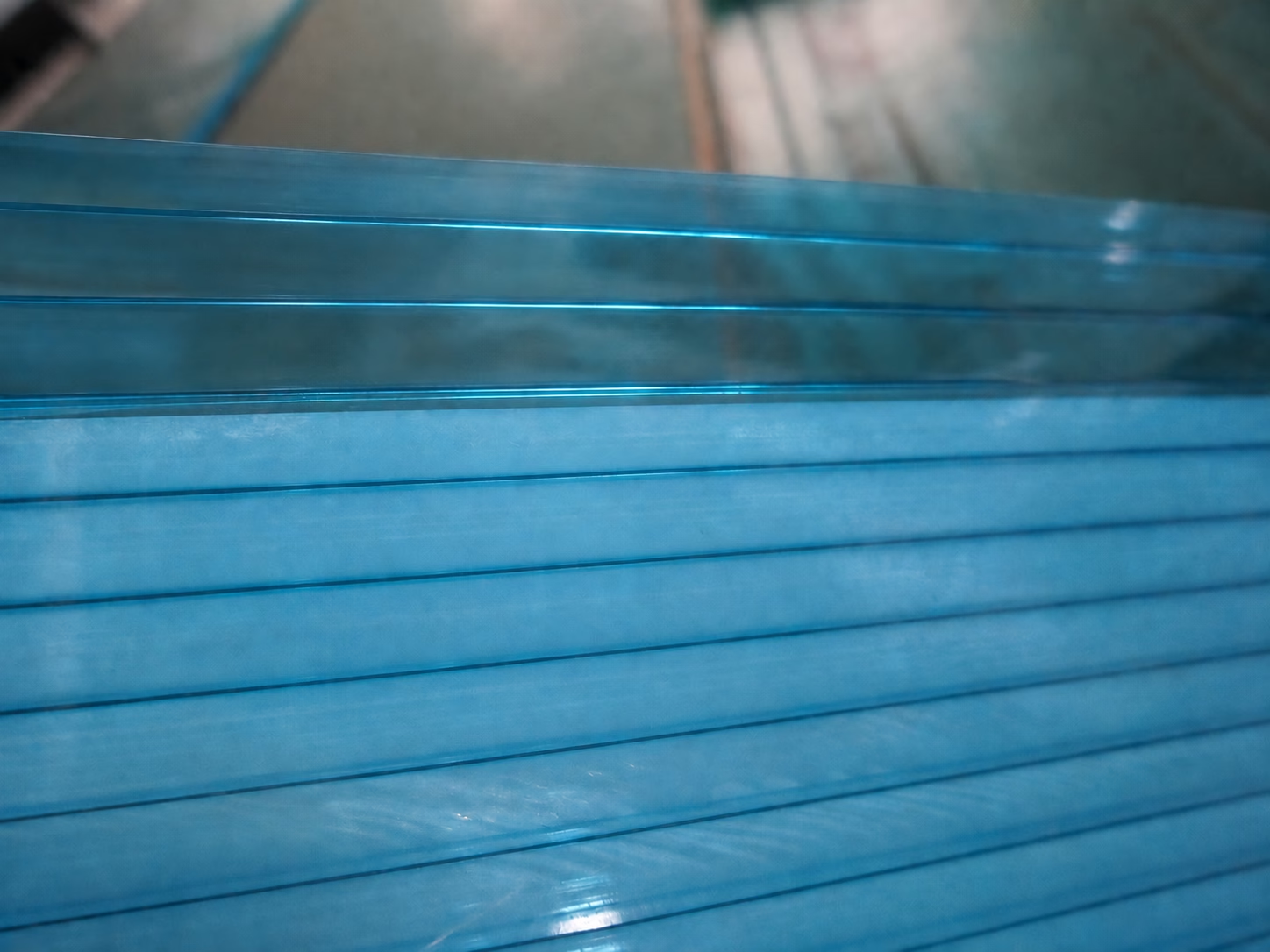
- ✓Clear, bronze, blue, grey, green, opal and selected custom colors can be reviewed against the required light transmission.
- ✓Outdoor-use, flame-controlled, light-diffusing, antistatic and hard-surface directions are grade-specific and should be confirmed separately.
- ✓Cutting, routing, drilling, bending, thermoforming, edge finishing, printing and protective-film requirements can be discussed.
What Is Polycarbonate Sheet?
Polycarbonate is an amorphous engineering thermoplastic that combines transparency with unusually high impact resistance.
Solid PC sheet can provide glass-like visibility at substantially lower weight while remaining easier to saw, route, drill, bend and thermoform. Transparent grades commonly publish visible-light transmission in the approximate 85–90% range, although actual values change with thickness, color, surface and grade.
PC sheet is not one universal specification. Untreated material can yellow or lose surface properties during prolonged sunlight exposure, and common sheet can scratch more readily than glass. Outdoor-use layers, abrasion-resistant surfaces, flame classifications, optical grades and chemical compatibility must therefore be confirmed for the actual application.
Polycarbonate Sheet Attributes
- Product
- Polycarbonate (PC) Sheet
- Material Type
- Solid amorphous engineering thermoplastic sheet.
- Thickness
- Common solid-sheet reference: 2–10 mm. Other thicknesses can be reviewed against the grade, width, quantity and finished application.
- Width
- 1220, 1560, 1820 and 2100 mm are common reference widths. Custom width can be reviewed according to the order requirement.
- Length
- Custom according to the order requirement. Common sheet references include 1220 × 2440 mm and 2000 × 3000 mm.
- Colors
- Clear, bronze, lake blue, royal blue, grey, green and opal are common directions; selected custom colors can be reviewed against a sample and quantity.
- Light Transmission
- Transparent sheet commonly provides approximately 85–90% visible-light transmission. Confirm the ordered thickness, color, surface and measured requirement.
- Impact Behavior
- PC sheet provides substantially higher impact resistance than ordinary glass and acrylic. Published comparisons commonly cite up to about 250 times ordinary glass and 30 times acrylic under specific conditions; use grade-specific data for design approval.
- Specific Gravity
- Approximately 1.2. At the same thickness and area, PC sheet is roughly half the weight of glass.
- Temperature Reference
- Published sheet data commonly shows approximately −40°C to +120°C. Actual continuous use depends on grade, load, support and exposure.
- Linear Expansion
- Approximately 6–8 × 10⁻⁵/°C is a common published reference. Framed panels and drilled installations need suitable expansion clearance.
- Outdoor Use
- Specify an ultraviolet-protected surface or coextruded layer for prolonged outdoor exposure; ordinary untreated PC should not be assumed suitable.
- Flame Behavior
- Classification varies by grade and thickness. State the required test method and rating before material selection; general PC characteristics do not confirm compliance.
- Chemical Behavior
- Compatibility must be checked for strong alkalis, acetone, ketones, aromatic or chlorinated solvents, ammonia, oils and cleaning agents.
- Processing
- Sawing, CNC routing, drilling, cutting, cold bending within design guidance, heat bending, thermoforming, trimming and edge finishing.
- Custom Grades
- Ultraviolet-protected, flame-controlled, light-diffusing, antistatic, tinted and abrasion-resistant directions can be reviewed separately.
- Typical Uses
- Machine guards, equipment windows, safety glazing, canopies, lighting covers, partitions, signage and fabricated industrial parts.
Polycarbonate Sheet Custom Service
PC sheet selection should begin with the finished use. Impact level, visibility, outdoor exposure, service temperature, support spacing, bending radius, fastening method, flame requirement and cleaning chemicals can all affect the grade, thickness and surface treatment.
Width and length can be customized to the order requirement. For cut or machined components, send a drawing showing finished dimensions, hole diameters, hole-to-edge distances, slots, radii, edge details and tolerances. For bent or thermoformed parts, include the forming direction, bend radius, mold details, trim line and visible surface.
PC expands and contracts more than glass or metal. Large panels, drilled holes and framed installations need suitable clearance, support and compatible sealing materials. Outdoor protection, abrasion resistance and flame classification are separate specifications and should be stated before quotation.
Polycarbonate Sheet Specifications That Can Be Reviewed
The final specification should be based on the finished-part drawing, optical requirement, exposure, fabrication method and installation conditions.
Grade and Thickness
Review clear general-purpose, outdoor-protected, flame-controlled, light-diffusing, antistatic or abrasion-resistant directions together with the required thickness.
Custom Width, Length and Tolerance
Specify finished width and length, thickness tolerance, cutting allowance, edge condition and flatness. Large formats are reviewed against production handling, packing and transport limits.
Color and Light Transmission
Review clear, bronze, blue, grey, green, opal or a selected custom color together with the required visibility, diffusion and light-transmission target.
Fabrication and Protection
Review cutting, drilling, routing, bending, thermoforming, printing, protective film, interleaving, pallet support and edge protection.
PC Sheet Structures and Surface Directions
This page focuses on solid PC sheet. Surface, color and protective-layer requirements should be selected according to visibility, light control, outdoor exposure and cleaning conditions.
Clear Solid Sheet
A flat transparent direction for guards, equipment windows, partitions and glazing where direct visibility is required.
Tinted Transparent Sheet
Bronze, blue, grey, green and other selected colors for projects that need reduced glare, coordinated appearance or controlled light transmission.
Granular or Embossed Sheet
A patterned surface that disperses direct light and limits clear see-through while retaining the impact behavior of the selected PC grade.
Frosted or Light-Diffusing Sheet
For lighting covers, partitions and decorative panels where more even light distribution or visual privacy is preferred.
Outdoor-Protected Sheet
A sheet with a specified protected surface or coextruded layer for prolonged sunlight exposure. The protected side and warranty basis must be confirmed for the order.
Hard-Surface and Functional Grades
Abrasion-resistant, antistatic, flame-controlled, heat-reflective and other functional directions can be reviewed when a test requirement or application standard is provided.
Common Applications for Polycarbonate Sheet
Solid PC sheet is selected where visibility, high impact resistance, lower weight and practical cutting or forming need to be combined in one material.
Machine Guards and Equipment Windows
Transparent guards, inspection windows, protective covers and equipment panels where impact resistance and visibility are required.
Safety Glazing and Partitions
Interior dividers, protective screens, public-area barriers and glazing panels made to the required support, thickness and compliance standard.
Canopies, Skylights and Covered Walkways
Outdoor rooflights, awnings and transparent covers using a suitable ultraviolet-protected grade with correct expansion allowance and installation support.
Transportation Components
Interior panels, transparent covers, instrument protection and lighting components where the specified optical, heat and regulatory requirements are confirmed.
Signs, Displays and Lighting
Illuminated signs, display panels, light covers and diffusers using the required color, light transmission, diffusion and print surface.
Industrial Fabricated Parts
Cut, drilled, routed, bent or thermoformed parts made from drawings for equipment builders, converters and assembly operations.
Published PC Flat-Sheet Data for Initial Material Review
The figures below are examples published for PC flat sheet and help purchasing or engineering teams identify what should be confirmed. They are not a certificate or guaranteed value for every PC grade.
Performance changes with resin grade, sheet thickness, color, surface treatment, conditioning and test method. The approved sample, ordered specification and applicable test report take priority over the general references below.
| Property | Published Test or Condition | Flat-Sheet Reference |
|---|---|---|
| Total Light Transmission | ASTM D1003, clear sheet, 3 mm | Approximately 89% |
| Specific Gravity | ASTM D792 | Approximately 1.2 |
| Notched Izod Impact | ASTM D256, 1/4-inch specimen reference | Approximately 14.3 kg·cm/cm |
| Linear Expansion | ASTM D696 | Approximately 6–8 × 10⁻⁵/°C |
| Service-Temperature Reference | Published PC sheet range | Approximately −40°C to +120°C |
| Thermal Conductivity | ASTM C177 | Approximately 0.2 W/m·°C |
| Tensile Strength at Yield | ASTM D638 | Approximately 630 kg/cm² |
| Flexural Strength | ASTM D790 | Approximately 920 kg/cm² |
| Flexural Modulus | ASTM D790 | Approximately 24,000 kg/cm² |
| Elongation at Break | ASTM D638 | Approximately 110% |
| Rockwell Hardness | ASTM D785 | Approximately M77 |
| Heat-Deflection Temperature | ASTM D648, published 4.6 kg/cm² condition | Approximately 136°C |
| Flammability Example | UL 94, published 3 mm flat-sheet reference | HB; confirm the ordered grade and required classification |
Important: Do not use a general comparison, website value or unverified sample as structural, fire, optical or regulatory approval. State the required test method and request the corresponding grade-specific document before production.
Cutting and Drilling
Support the panel, use sharp suitable tools, remove chips and avoid damaged edges. Hole diameter, edge distance and clearance should account for fastening load and thermal movement.
Bending and Thermoforming
Minimum cold-bend radius depends on grade and thickness. Heat-forming work may require controlled pre-drying, even heating, suitable tooling and a trial part before batch processing.
Installation
Place the specified protected side toward the exposure, allow expansion space, avoid over-tightening fasteners and use compatible gaskets, tapes, sealants and cleaners.
Cleaning and Storage
Use clean water, mild neutral soap and a soft non-abrasive cloth. Keep sheets supported, dry and protected from scratching; do not clean with unapproved solvents or strong alkaline agents.
Polycarbonate Sheet Development and Supply Process
Grade, dimensions, optical appearance, surface protection, fabrication and packing are confirmed around the approved sheet or finished-part specification.
Confirm the Application
Review visibility, impact, outdoor exposure, operating temperature, chemical contact, installation, quantity and required documents.
Select the PC Grade
Confirm clear general-purpose, outdoor-protected, flame-controlled, diffusing, antistatic or another suitable grade.
Approve Sheet Details
Confirm thickness, custom width and length, color, light transmission, protected side, tolerance, cutting allowance and protective film.
Sample and Drawing Review
Prepare a sheet sample, cut piece or trial part for color, visibility, dimensions, holes, bends, edges and assembly review.
Process and Inspect
Complete cutting, routing, drilling, bending, thermoforming or finishing and check the agreed visual and dimensional points.
Protect and Deliver
Retain the specified surface film, protect edges, interleave finished parts where needed and arrange supported carton or pallet packing.
What Should Be Confirmed Before Batch Supply?
A retained sheet sample, formed-part sample or approved drawing gives purchasing and production teams a clear repeat-order reference.
Sheet and Surface Approval
Agree the measurable and visual points before cutting, drilling or forming begins.
- PC grade
- Thickness and tolerance
- Width and length
- Color and light transmission
- Protected surface side
- Visible defects
- Flatness
- Protective film
Fabricated-Part Approval
Machined, bent or formed parts should be reviewed against the drawing, assembly and operating requirements.
- Overall dimensions
- Hole and slot positions
- Edge distance and radii
- Bend or forming details
- Edge finish
- Warping
- Surface appearance
- Packing protection
What Information Is Needed for a PC Sheet Quote?
Please send the required PC grade, thickness, custom width and length, color, light-transmission target, surface treatment, quantity and application. For a bent, thermoformed or machined part, include the finished drawing, tolerances, holes, radii, protected surface side and expected annual volume.
Polycarbonate Sheet Buyer and Technical FAQs
Practical questions to review before grade selection, cutting, forming, installation and repeat supply.
What is polycarbonate sheet?
Polycarbonate sheet is a solid engineering thermoplastic sheet known for high impact resistance, useful optical clarity, low weight and practical fabrication. This page focuses on solid flat PC sheet rather than hollow multiwall or corrugated roofing structures.
Can PC sheet thickness, width and length be customized?
Yes. Thickness, width and length can be reviewed to the order requirement. Common references include 2–10 mm thickness, widths of 1220, 1560, 1820 and 2100 mm, and sheet sizes such as 1220 × 2440 mm or 2000 × 3000 mm. Final availability depends on grade, color, tolerance, quantity, fabrication, handling and transport.
How much light can clear PC sheet transmit?
Transparent PC sheet commonly publishes visible-light transmission of approximately 85–90%. The exact value changes with thickness, resin grade, color, surface, protective layer and test method, so a measured target should be stated for optical or lighting applications.
How is polycarbonate different from acrylic sheet?
Polycarbonate is generally selected for much higher impact resistance and wider temperature capability. Acrylic usually provides better surface hardness and can offer slightly higher optical clarity. The correct choice depends on impact, scratch resistance, appearance, fabrication, exposure and budget.
Is ordinary PC sheet suitable for outdoor use?
Do not assume that untreated PC is suitable for prolonged sunlight exposure. Request an ultraviolet-protected surface, coating or coextruded layer, identify which side faces outdoors and follow the supplier's installation guidance.
What temperature range is suitable for PC sheet?
Published sheet references commonly show approximately −40°C to +120°C. Actual continuous service depends on the grade, duration, load, panel support, thermal cycling and environment. Use grade-specific data for temperature-critical parts.
Can PC sheet be cut, drilled, bent or thermoformed?
Yes. PC sheet can be sawed, CNC routed, drilled, cold bent within suitable design guidance, heat bent and thermoformed. Correct tools, supported workholding, hole clearance, edge distance, bend radius and thermal-expansion allowance help prevent stress cracking and distortion.
Which chemicals should be checked before using PC sheet?
Compatibility should be checked for strong alkalis, acetone, ketones, aromatic and chlorinated solvents, ammonia, oils, sealants, adhesives and cleaning agents. Send the chemical name, concentration, temperature and contact time for review and test the actual combination.
What should be allowed for when installing PC sheet?
Allow for thermal expansion, suitable support, hole clearance, compatible seals and the correct protected-surface direction. Fasteners should not clamp the panel so tightly that movement is prevented. Structural glazing, overhead panels and safety barriers require project-specific design approval.
How should polycarbonate sheet be cleaned?
Rinse loose dust first, then use clean water, mild neutral soap and a soft non-abrasive cloth. Avoid dry wiping, abrasive pads, strong alkaline cleaners and unapproved solvents. Test the cleaner, sealant or adhesive on the ordered sheet before general use.
Is polycarbonate sheet flame retardant?
PC material should not automatically be treated as a specified flame-retardant grade. Published classifications vary with formulation and thickness, from HB examples to higher-rated grades. State the exact test method, thickness and required rating before quotation and request the corresponding document.
What should we send for an accurate quotation?
Please send the required PC grade, thickness, custom width and length, color, light transmission, surface protection, quantity, application, exposure, fabrication and packing requirements. Include a drawing, sample or clear photographs for cut, bent, formed or machined parts.