Custom Engineering Plastic Sheet Supply
Acrylic (PMMA) Sheet
Acrylic sheet is a rigid PMMA thermoplastic used when a project needs clear visibility, low weight, attractive edges and straightforward fabrication. Clear grades commonly reach about 92–93% visible-light transmission, and a panel weighs less than half as much as ordinary glass of the same thickness and area.
Guangzhou Huayun Manufacturing supplies full sheets and custom-cut acrylic parts. We can work from a drawing, physical sample or finished-size list for laser cutting, CNC routing, drilling, engraving, polishing, heat bending and thermoforming. Tell us whether the part is for indoor or outdoor use, how it will be installed and which surfaces remain visible so we can match the sheet and processing method to the application.
- ✓Common thickness reference: 1.8–30 mm, with custom width, length and finished panel dimensions available to order.
- ✓Choose cast acrylic for flexible colors, thicknesses and surface effects, or extruded acrylic for consistent thickness and efficient forming.
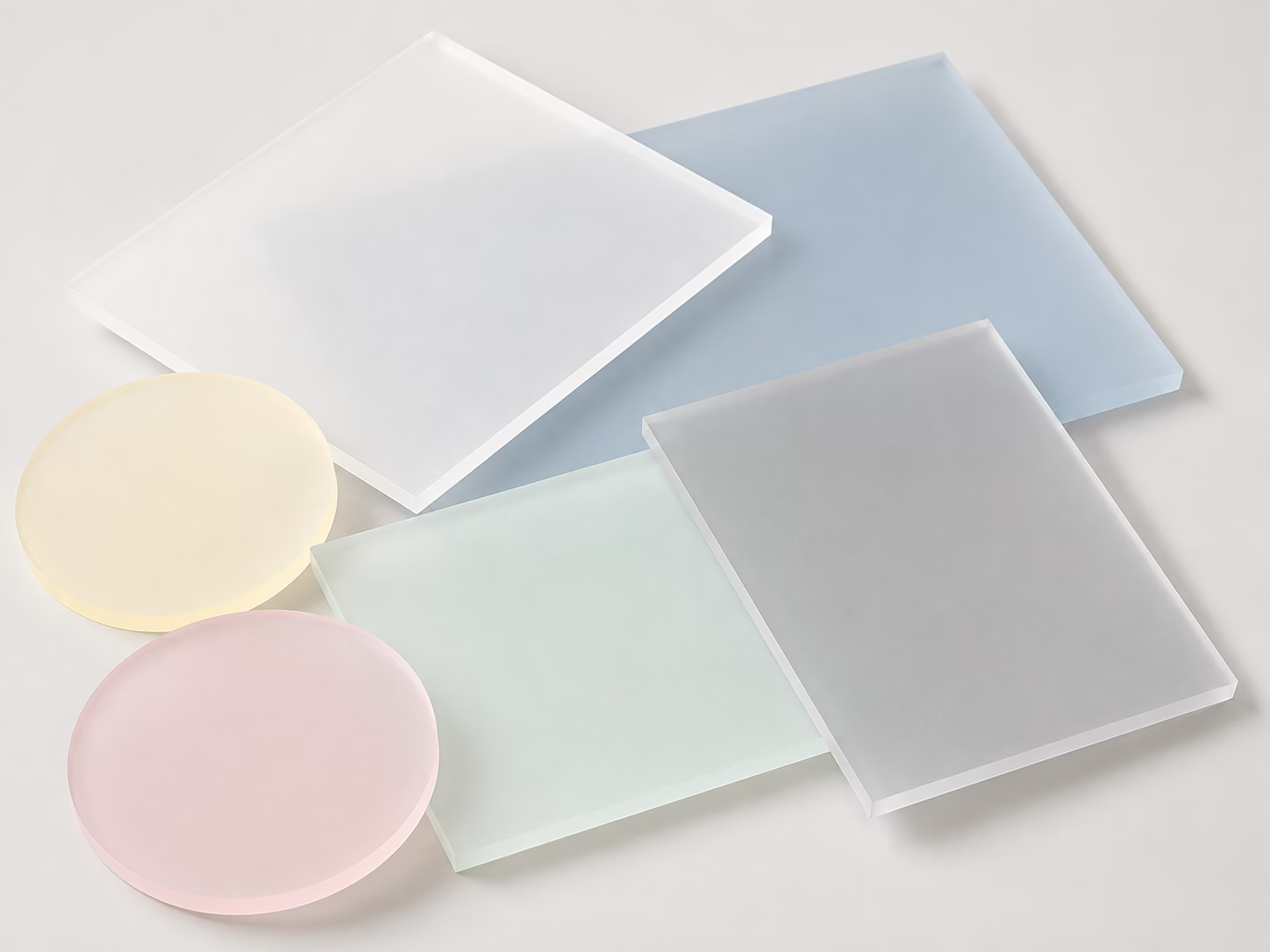
- ✓Clear, opal, translucent, opaque, tinted, matte, frosted, textured and mirror-style sheets can be matched to the required appearance.
- ✓Order full sheets, cut blanks or finished components with machining, engraving, bending, polishing, bonding, printing and protective packing.
What Is Acrylic Sheet?
Acrylic sheet is made from polymethyl methacrylate, usually shortened to PMMA. It is also called acrylic board or acrylic glass, although it is a thermoplastic rather than mineral glass.
Its combination of clarity, low weight, weather resistance, colorability and clean machining makes it useful for signs, displays, picture framing, lighting, furniture, guards and decorative parts. Acrylic can be sawed, laser cut, routed, drilled, engraved, polished, printed, bonded, heat bent or thermoformed.
There are two main sheet processes. Cast acrylic normally has higher molecular weight, good stiffness and more flexibility for colors, thicknesses and textures. Extruded acrylic usually has tighter thickness consistency and is efficient for line bending or repeat thermoforming. Neither process is automatically better; the right choice depends on the drawing, tolerance, appearance and production method.
Acrylic Sheet Attributes
- Material Name
- Acrylic sheet, PMMA sheet or acrylic board; chemical name: polymethyl methacrylate.
- Manufacturing Process
- Cast or extruded sheet. State the preferred process when thickness tolerance, forming behavior, color range or surface finish is important.
- Supply Form
- Full sheet, cut-to-size panel, machined blank or finished fabricated component.
- Thickness
- Common reference: 1.8, 2, 3, 4, 5, 8, 10, 15, 20 and 30 mm. Additional thicknesses depend on process, sheet size, color and order quantity.
- Width and Length
- Made to the order requirement. Published full-sheet references include 1050 × 2050, 1220 × 1830, 1220 × 2440, 1220 × 3050, 1270 × 2490, 1350 × 2000, 1440 × 2940, 1610 × 2550, 1850 × 2450 and 2050 × 3050 mm.
- Appearance
- Clear, opal, white, black, transparent tint, translucent or opaque color, with gloss, matte, frosted, textured, mirror or selected coated surfaces.
- Light Transmission
- Approximately 92–93% is a common reference for clear acrylic. The ordered grade, thickness, tint, texture and coating determine the actual value.
- Specific Gravity
- Approximately 1.19–1.20, making acrylic less than half the weight of ordinary glass at equal thickness and area.
- Impact Performance
- Published comparisons often place acrylic at roughly 7–16 times the impact resistance of ordinary glass under stated test conditions. It is not a substitute for polycarbonate where severe impact is expected.
- Surface and Cleaning
- Standard acrylic can scratch. Keep the protective film in place during fabrication and use a soft cloth with an approved, non-abrasive cleaner after installation.
- Thermoforming Reference
- Approximately 140–180°C. The correct heating time and temperature depend on cast or extruded process, grade, thickness, moisture and tooling.
- Heat-Deflection Reference
- Approximately 100°C is a general material reference, not a continuous-use rating. Confirm grade-specific data when the part carries load at elevated temperature.
- Linear Expansion
- Approximately 6 × 10⁻⁵/°C. Frames, drilled holes and bonded assemblies require clearance for temperature movement.
- Outdoor Use
- PMMA has good inherent weather resistance, but color stability, expected service life and ultraviolet transmission or filtering must be specified for the actual grade.
- Chemical Contact
- Test the actual sheet with cleaners, adhesives, sealants, inks and process chemicals. Acetone, ketones and aromatic or chlorinated solvents can cause crazing or damage.
- Fabrication
- Sawing, laser cutting, CNC routing, drilling, engraving, polishing, heat bending, thermoforming, bonding, printing and assembly.
- Common Uses
- Signs, display cases, retail fixtures, picture frames, exhibition covers, lighting panels, furniture, partitions, guards and decorative components.
Acrylic Sheet Custom Service
The most useful starting point is the finished part, not a generic material name. Let us know what the customer needs to see through the panel, which faces are visible, how the part is supported and whether it will be exposed to sunlight, cleaning, chemicals, heat or frequent handling.
Width and length can be customized to the order. For machined components, provide a drawing with finished dimensions, holes, slots, radii, tolerances, edge finish, engraving and print locations. For bent or thermoformed parts, add the bend radius, forming direction, mold or fixture details and final trim line.
Large panels require enough thickness, support and expansion clearance. Differences in humidity across the two faces can contribute to bowing, while rough wiping can mark an ordinary acrylic surface. Hard-coated, anti-reflective, antistatic, static-dissipative and ultraviolet-filtering sheets are separate grades and should be requested by performance rather than assumed from the word “acrylic.”
Acrylic Sheet Options for Custom Orders
Build the specification around the finished drawing, required appearance, fabrication method and installation environment.
Select the Sheet Process
Choose cast or extruded acrylic according to thickness tolerance, color range, surface finish, machining and forming requirements.
Set the Finished Dimensions
Specify thickness, width, length, dimensional tolerance, flatness, cut allowance and edge condition. Large sheets also need a practical packing and transport plan.
Match Color and Surface
Choose clear, tinted, translucent, opal or opaque material together with gloss, matte, frosted, textured, mirror or coated surfaces.
Add Fabrication
Order cutting, routing, drilling, engraving, bending, thermoforming, polishing, bonding or printing, then define film, interleaving and pallet protection.
Available Acrylic Sheet Types and Finishes
The sheet process controls fabrication behavior; color, texture and coating control the finished appearance and daily-use performance.
Clear Cast Acrylic
A strong starting point for polished display parts, engraving, custom colors, thicker sheets and projects that need a broad choice of sizes or surface effects.
Clear Extruded Acrylic
Useful for consistent-gauge panels, repeat cutting, line bending and thermoforming when the required size and color fit the extrusion range.
Colored, Opal and Translucent Acrylic
Transparent tints, diffusing opal, translucent shades and opaque colors for illuminated signs, displays, brand fixtures and decorative work.
Frosted, Matte and Textured Acrylic
Surfaces that soften reflections, diffuse light or provide privacy for partitions, lighting panels, retail fixtures and interior features.
Mirror and Decorative Acrylic
Lightweight reflective and patterned sheets for visual merchandising, furniture, stage work and interior decoration where ordinary mirror glass is unsuitable.
Coated and Functional Acrylic
Hard-coated, anti-reflective, antistatic, static-dissipative or ultraviolet-filtering grades for applications with defined optical, cleaning or protection needs.
Which Acrylic Sheet Should You Choose?
Use the finished application to narrow the choice, then confirm the exact grade, thickness and surface with a sample or data sheet.
| Project Requirement | Practical Starting Point | Details to Confirm |
|---|---|---|
| High-clarity display or polished component | Clear cast acrylic | Optical quality, visible faces, edge polish, thickness tolerance and protective film. |
| Repeat panels with consistent thickness | Clear or colored extruded acrylic | Gauge tolerance, sheet size, cutting method, heat bending and production quantity. |
| Custom color, texture or thicker sheet | Cast acrylic | Color sample, translucency, gloss, texture, thickness and minimum production quantity. |
| Illuminated sign or light diffuser | Opal, frosted or diffusing acrylic | Light transmission, diffusion, LED spacing, color temperature, hot spots and outdoor exposure. |
| Picture frame or exhibition cover | Clear or specialist glazing acrylic | Panel size, support, ultraviolet filtering, reflection, abrasion, static and artwork sensitivity. |
| Public-facing panel cleaned frequently | Hard-coated acrylic where suitable | Approved cleaner, abrasion level, coating side, edge processing and replacement expectations. |
| Guard exposed to severe impact | Compare acrylic with polycarbonate | Impact level, temperature, clarity, surface hardness, fire requirements and fixing design. |
Selection note: Words such as “clear,” “outdoor,” “UV,” “antistatic” or “hard-coated” do not describe one universal grade. Put the measurable requirement, test method or approved sample on the order specification.
Where Is Acrylic Sheet Used?
Acrylic is widely specified when a part needs optical clarity, controlled color, clean edges, lower weight than glass or a formed three-dimensional shape.
Signs and Advertising
Illuminated letters, printed signs, engraved nameplates, wayfinding panels and logo components in clear, colored, opal or light-diffusing sheet.
Retail Displays and Exhibitions
Product stands, display cases, shelves, risers, protective covers and branded fixtures with polished, matte or decorative edges.
Picture Framing and Collections
Lightweight, shatter-resistant glazing for large frames, transported works and public displays, with specialist UV-filtering, anti-reflective or antistatic grades where required.
Lighting and Diffusers
LED covers, illuminated panels, light boxes, lenses and decorative fixtures made from clear, opal, frosted or purpose-designed diffusing acrylic.
Furniture and Interior Design
Partitions, cabinet inserts, table components, wall panels and formed interior features in clear, colored, frosted, textured or mirror finishes.
Equipment and Custom Parts
Instrument panels, machine windows, computer-case panels, guards and fabricated components where the impact, heat, chemical and fire conditions suit PMMA.
Typical Clear Cast Acrylic Sheet Properties
These published values are useful for an initial comparison. They are not guaranteed values for every PMMA sheet, color, thickness or production process.
Performance changes with the raw material, cast or extruded process, thickness, color, surface treatment, conditioning and test method. For an engineered part, use the ordered grade data and applicable test report rather than a general website value.
| Property | Reference Basis | Typical Flat-Sheet Value |
|---|---|---|
| Light Transmission | Clear cast sheet | Approximately 92% |
| Specific Gravity | General cast-sheet value | Approximately 1.19–1.20 |
| Rockwell Hardness | M scale | Approximately M100 |
| Shear Strength | Published reference | Approximately 630 kgf/cm² (62 MPa) |
| Flexural Strength | Published reference | Approximately 1,050 kgf/cm² (103 MPa) |
| Tensile Strength | Published reference | Approximately 760 kgf/cm² (75 MPa) |
| Compressive Strength | Published reference | Approximately 1,260 kgf/cm² (124 MPa) |
| Dielectric Strength | Published reference | Approximately 20 kV/mm |
| Surface Resistivity | Published reference | Greater than 1016 ohms |
| Thermoforming Temperature | General processing range | Approximately 140–180°C |
| Heat-Deflection Temperature | General material reference | Approximately 100°C |
| Linear Thermal Expansion | General material reference | Approximately 6 × 10⁻⁵/°C |
| Water Absorption | 24-hour reference | Approximately 0.3% |
Important: Do not use these typical values as structural, optical, electrical, fire or regulatory approval. Put the required property and test method on the drawing or purchase specification and request the corresponding grade-specific document before production.
Cutting and Edge Finishing
Match laser, saw or router settings to cast or extruded sheet and support the panel to prevent vibration. State whether the edge is left machined, polished or prepared for bonding.
Drilling and Installation
Use plastic-appropriate drills, smooth holes, generous internal radii and enough edge distance. Provide expansion clearance and avoid countersinking or fastener pressure that creates local stress.
Bending and Thermoforming
Heating conditions depend on process, grade and thickness. Controlled heating, suitable radii, correct cooling and a trial part help prevent bubbles, whitening, distortion and springback.
Handling and Cleaning
Keep the surface film on during transport and cutting, but do not leave it exposed to prolonged outdoor sun. Remove loose dust before wiping and use a soft cloth with mild, approved cleaner.
From Acrylic Sheet Requirement to Finished Part
A clear drawing and approved sample keep the material, appearance, fabrication and packing requirements consistent from quotation through delivery.
Describe the Use
Tell us what the part does, where it is installed and whether it faces sunlight, heat, moisture, chemicals, impact or frequent cleaning.
Choose the Starting Sheet
Set the cast or extruded process, grade, thickness, color, transparency, surface and any specialist optical or protective requirement.
Confirm Dimensions
Provide full-sheet or finished sizes, tolerances, holes, slots, radii, edge condition, visible faces and protective-film requirement.
Approve a Sample
Use a color chip, cut panel or trial component to confirm clarity, tint, surface, dimensions, machining, bends, edges and assembly fit.
Fabricate and Inspect
Complete the agreed cutting, routing, drilling, engraving, forming, polishing, bonding or printing and inspect the points listed on the drawing.
Pack Visible Surfaces
Retain protective film where specified, protect polished edges, separate finished parts and use supported carton or pallet packing for transport.
What Should Be Approved Before Bulk Production?
Keep the approved drawing and physical sample together so purchasing, production and inspection teams use the same repeat-order standard.
Starting Sheet
Agree the measurable and visual criteria before the sheet is cut or formed.
- Cast or extruded process
- Grade and raw-material requirement
- Thickness and tolerance
- Width, length and squareness
- Color and light transmission
- Gloss, haze or texture
- Flatness and visible defects
- Protective-film type
Finished Component
Inspect fabricated parts against the drawing, approved sample and assembly requirement.
- Overall dimensions
- Hole and slot positions
- Edge distance and radii
- Engraving or print position
- Edge finish and polish
- Bend angle or formed profile
- Surface scratches and residues
- Individual and pallet protection
Send These Details for an Acrylic Sheet Quote
A drawing or finished-size list is the fastest way to receive an accurate quotation. Include the application and exposure conditions as well as the sheet dimensions so the material process, surface and packing are priced correctly.
Frequently Asked Questions About Acrylic Sheet
Clear answers to common questions about PMMA sheet selection, dimensions, fabrication, installation and care.
What is acrylic sheet made from?
Acrylic sheet is made from polymethyl methacrylate, abbreviated as PMMA. It is a transparent thermoplastic used for clear, colored, translucent, matte, mirror and fabricated sheet applications.
What is the difference between cast and extruded acrylic?
Cast acrylic generally has higher molecular weight, good stiffness and broad flexibility for colors, thicknesses and textures. Extruded acrylic usually provides tighter thickness consistency and efficient bending or thermoforming. The correct process depends on the finished part and tolerance.
Can acrylic sheet thickness, width and length be customized?
Yes. Thickness, width, length and finished cut size can be made to the order requirement. Common thicknesses include 1.8, 2, 3, 4, 5, 8, 10, 15, 20 and 30 mm, with common full-sheet references including 1220 × 2440 mm and 2050 × 3050 mm. Final availability depends on process, color, tolerance, quantity and fabrication.
How much light can clear acrylic sheet transmit?
Clear acrylic commonly publishes visible-light transmission of approximately 92–93%. The exact value changes with cast or extruded process, thickness, resin grade, color, surface, coating and test method.
How is acrylic different from glass?
Acrylic is much lighter and more resistant to shattering than ordinary glass, while glass is harder, more scratch resistant, more rigid and provides a stronger moisture barrier. Acrylic is easier to machine and form, but large panels need suitable thickness and support.
How is acrylic different from polycarbonate?
Acrylic usually provides higher optical clarity, better surface hardness and attractive polished edges. Polycarbonate provides much greater impact resistance and broader heat capability. The choice should be based on clarity, impact, scratch risk, temperature, fabrication and compliance requirements.
Is acrylic sheet suitable for outdoor use?
PMMA has good inherent weather resistance, but required outdoor life, color change, ultraviolet transmission or blocking, coating performance and warranty must be confirmed for the ordered grade. Do not apply one supplier's outdoor claim to every acrylic sheet.
Does every acrylic sheet provide the same UV protection?
No. Standard clear acrylic, outdoor grades and specialist ultraviolet-filtering glazing can have very different spectral performance. If the sheet protects artwork, printed graphics or light-sensitive materials, state the required wavelength range and blocking percentage and request grade-specific data.
Is acrylic a good choice for picture frames and display cases?
Acrylic is useful for large, transported or public-facing displays because it is lighter and more resistant to shattering than ordinary glass. The frame must support the panel and allow movement. For valuable art, pastels or charcoal, also consider ultraviolet filtering, reflection, abrasion and static; specialist antistatic glazing may be required.
Can acrylic be laser cut, drilled, bent or thermoformed?
Yes. Acrylic can be laser cut, sawed, CNC routed, drilled, engraved, heat bent, thermoformed, polished, bonded and printed. Tooling and process settings should match cast or extruded sheet, thickness, edge requirement and finished appearance.
How should acrylic sheet be cleaned without scratching it?
Remove or rinse loose dust before wiping, then use clean water, mild neutral soap or an approved acrylic cleaner with a soft, non-abrasive cloth. Avoid dry wiping, rough paper, abrasive pads and cleaners containing unapproved solvents or ammonia. Follow the coating supplier's instructions for hard-coated or anti-reflective surfaces.
Which chemicals should be checked before using acrylic?
Compatibility should be checked for acetone, ketones, aromatic and chlorinated solvents, alcohol-rich cleaners, concentrated chemicals, adhesives, sealants, paints and inks. Send the chemical name, concentration, temperature and contact time, then test the actual combination.
Can large acrylic panels bow or change dimension?
Yes. Acrylic expands with temperature, and different humidity on its two surfaces can contribute to bowing. Large panels need suitable thickness, support, edge clearance and fastening or bonding design. Do not force a panel into a rigid frame without movement allowance.
What should we send for an accurate quotation?
Please send the required cast or extruded process, thickness, custom width and length, color, transparency, surface, quantity, application, exposure, fabrication, edge finish and packing requirements. Include a drawing, sample or clear photographs for cut, engraved, bent, formed, polished or bonded parts.