Custom Industrial Adhesive Tape Supply
PET Tape
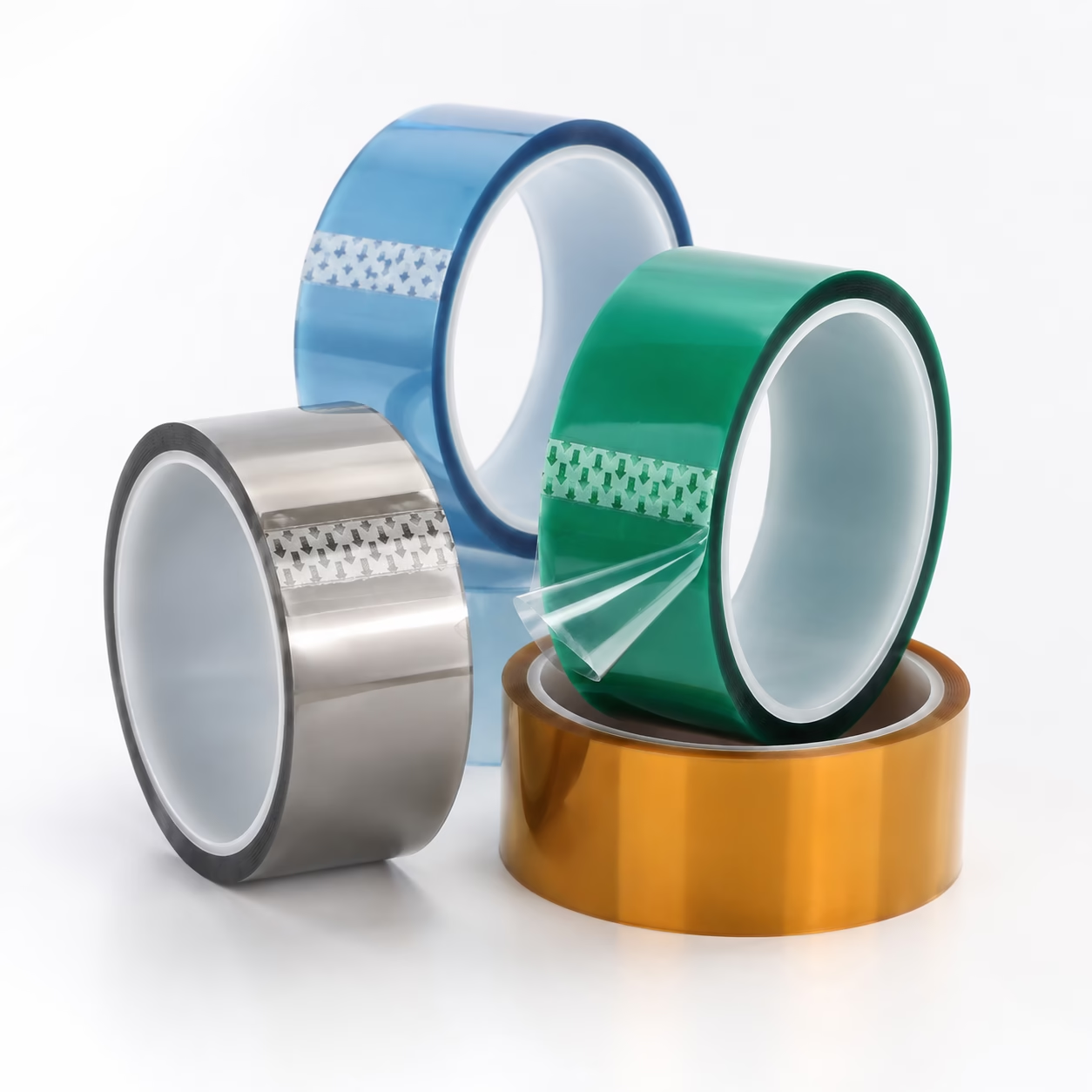
PET tape is a single-sided industrial adhesive tape made from a thin polyester film coated with heat-resistant silicone pressure-sensitive adhesive. It combines a smooth surface, good tensile strength, electrical insulation and resistance to many process chemicals, making it useful for temporary masking, protection, holding and splicing during controlled heat processes.
Guangzhou Huayun Manufacturing supplies standard rolls, precision slit rolls, wider master rolls and drawing-based die-cut parts. Width, length, thickness, color, core, winding direction and packing can be prepared to order. For accurate tape selection, please provide the substrate, process chemical, peak temperature, heating time, number of cycles and removal requirement.
- ✓Common total thicknesses include 0.05, 0.06, 0.07, 0.08 and 0.09 mm; 0.10 mm and other constructions are available for selected models.
- ✓Standard grades are commonly used around 180°C, while selected grades are specified for short cycles from 200°C up to 220–230°C.
- ✓Common roll lengths are 33 m and 66 m; selected constructions can be supplied in longer rolls up to approximately 200 m.
- ✓Green, clear, blue, red, yellow and white tapes can be supplied according to the required construction and application.
What Is PET Tape?
PET tape uses polyethylene terephthalate polyester film as the backing and normally uses heat-resistant silicone pressure-sensitive adhesive for high-temperature industrial applications.
The thin, strong film produces a neat edge and remains easy to identify on the production line. It can mask surfaces during powder coating, painting, electroplating and selected electronics processes, and can also provide temporary protection, fixing, insulation or film splicing when the adhesive construction matches the job.
Temperature must always be considered together with time. Standard PET tape is often used around 180°C, while selected grades may withstand 200°C, 220°C or 230°C for a short cycle such as 30 minutes. For longer exposure, repeated cycles or higher-temperature soldering, compare the process with a suitable polyimide tape before approval.
PET Tape Attributes
- Tape Type
- Single-sided high-temperature PET polyester-film adhesive tape for industrial masking, protection, temporary fixing and splicing.
- Backing
- Dimensionally stable PET polyester film. Common backing-thickness references include approximately 0.025, 0.035, 0.038, 0.050 and 0.075 mm.
- Adhesive
- Heat-resistant silicone pressure-sensitive adhesive. Formula, coating weight, tack, peel and removal performance vary by model.
- Color
- Transparent green is the standard color. Clear, blue, red, yellow, white, black and other colors are available for selected constructions.
- Total Thickness
- Common references include 0.05, 0.06, 0.07, 0.08 and 0.09 mm. Selected models are also available in 0.055, 0.095, 0.10 mm and other thicknesses.
- Width
- Precision slit widths are made from master rolls up to approximately 500 mm wide. Finished width and tolerance depend on the slitting or die-cutting method.
- Roll Length
- 33 m and 66 m are standard references. Selected constructions can be supplied in custom lengths up to approximately 200 m.
- Temperature Capability
- Standard working references are commonly around 180°C. Short-term grades are often listed at 200°C for 30 minutes, while selected constructions may reach 220–230°C for 30 minutes after verification.
- Initial Tack
- Approximately 2–5 N is found in common published examples, depending on the tape construction and test method. Confirm the value required for automatic or manual application.
- Adhesion to Steel
- Approximately 6–8 N/25 mm is common for several green PET tape grades. Compare values only when substrate preparation, dwell time, peel angle, speed and test method are the same.
- Tensile Strength
- Published examples commonly range from approximately 90–155 N/25 mm, depending on PET-film thickness and test method.
- Elongation at Break
- Approximately 30–120% is found across different constructions. The confirmed model value should be used when stretch affects masking accuracy.
- Dielectric Strength
- Approximately 4,000–5,000 V is a common reference for selected grades. Electrical insulation must be verified for the actual thickness and application.
- Process Resistance
- PET film and silicone adhesive provide useful resistance to many solvents, acids, alkalis and coating processes, but the actual chemical and exposure time must be tested.
- Removal
- Designed for clean removal after a compatible process. Residue, discoloration and surface marking must be checked on the actual substrate and temperature cycle.
- Converted Formats
- Standard rolls, precision slit rolls, tabs, discs, plugs, frames, sheets and drawing-based die-cut masking parts.
- Core and Winding
- Core size, roll direction, adhesive side in or out, splice limitation and roll labeling can be prepared for manual or machine application.
- Storage
- Keep sealed in a cool, dry place away from heat and direct sunlight. A common reference is 25°C and 65% relative humidity; shelf life follows the confirmed model and packaging label.
- Typical Uses
- Powder coating, baking paint, electroplating, anodizing, selected PCB and electronics processes, temporary fixing, splicing and general heat-process masking.
PET Tape Custom Service
The correct PET tape depends on where and how it is used. Aluminum, stainless steel, glass, plastic, solder mask, painted surfaces and silicone-treated release liners can respond differently to the same adhesive. Powder type, plating chemistry, temperature ramp, dwell time, cooling method and removal timing also affect the result.
Guangzhou Huayun Manufacturing can supply full-width material, slit rolls and drawing-based converted parts. Send the required width, length, core, winding direction, color, backing thickness, total thickness and packing method. For die-cut parts, include a dimensioned drawing and clearly mark the adhesive side.
Clean removal is achieved by matching the tape to the process. A sample trial on the production substrate is recommended before bulk supply, especially on anodized aluminum, textured powder coating, soft paint, engineering plastics or silicone-sensitive surfaces.
PET Tape Specifications for Custom Orders
The order specification should match the substrate, heating profile, masking or fixing method, removal requirement and production-line handling.
Thickness and Heat Profile
Select backing thickness, total thickness and adhesive according to peak temperature, dwell time, heating cycles and required edge definition.
Width, Length and Core
Specify slit width, width tolerance, roll length, core size, winding direction and any splice limitation required by the line.
Color and Adhesive Performance
Confirm color, peel range, initial tack, holding requirement, removal temperature and allowable residue on the actual surface.
Die Cutting and Packing
Provide a drawing for tabs, discs, frames or plugs and state liner, tab, sheet layout, bag quantity, label and carton requirements.
Where Is PET Tape Used?
High-temperature PET silicone tape is used when a short, controlled heat process needs a thin film, good tensile strength, electrical insulation or removal after processing.
Powder Coating
Masking holes, edges, threads, contact areas and appearance surfaces during powder application and oven curing.
Baking Paint and Spray Finishing
Protecting defined areas during wet painting, spray coating and controlled baking cycles while maintaining a clean paint line.
Electroplating and Anodizing
Temporary masking of selected metal surfaces during compatible plating, anodizing and chemical-treatment processes.
PCB and Electronic Processing
Masking gold fingers, contacts and selected circuit areas, plus temporary component holding and insulation when the actual heat profile fits the PET grade.
Film and Release-Liner Splicing
Joining silicone-treated release liners, leather-release films and process webs after adhesive compatibility and back-side release have been tested.
Industrial Surface Protection
Temporary protection and die-cut masking for metal panels, aluminum profiles, stainless steel, glass, appliances, automotive parts and engineering plastics.
PET Tape Supply and Conversion Process
Material construction, adhesive coating, slitting, die cutting and inspection are arranged around the approved tape sample and documented process conditions.
Confirm the Process
Record substrate, surface treatment, process chemical, peak temperature, dwell time, cycles, removal timing and acceptable residue.
Select the Construction
Choose PET film thickness, silicone adhesive, total thickness, color and performance range for the target process.
Coating and Curing
Prepare the adhesive coating and curing conditions required for coating consistency, adhesion and controlled unwind.
Slitting or Die Cutting
Convert the master roll into specified widths, lengths, cores or drawing-based shapes with the required liner and layout.
Inspect and Trial
Check appearance, thickness, width, winding, adhesion and other agreed values; use process trials when heat removal is critical.
Protect and Deliver
Seal rolls or converted parts against dust and moisture, label the specification and pack to prevent edge damage or telescoping.
What Should Be Approved Before Batch Supply?
Keep the approved tape sample, application record and converted-part drawing together as the repeat-order reference.
Tape and Roll Inspection
Confirm measurable construction and winding details before the tape reaches the production line.
- PET backing and adhesive
- Backing and total thickness
- Color and surface appearance
- Slit width and tolerance
- Roll length and core
- Winding direction
- Adhesion and tensile values
- Labels and carton packing
Application Verification
Trial the tape on the real part whenever masking quality or residue affects finished-product acceptance.
- Initial wet-out
- Edge lifting
- Coating bleed
- Peak temperature and dwell
- Film shrinkage
- Removal force
- Adhesive residue
- Substrate discoloration
What Information Is Needed for a PET Tape Quote?
Please send the tape dimensions together with the real processing conditions. A current tape sample, technical data sheet, masked-part photograph or die-cut drawing helps us compare the construction before sampling and quotation.
PET Tape Buyer and Technical FAQs
Practical answers for purchasing, process engineering, quality and production teams before testing or placing an order.
What is PET tape made from?
High-temperature PET tape normally uses a PET polyester-film backing coated on one side with heat-resistant silicone pressure-sensitive adhesive. Green is the most common color because it is easy to see during application, inspection and removal.
What temperature can PET tape withstand?
Standard working references are commonly around 180°C. Many short-term grades are listed at 200°C for 30 minutes, while selected constructions may reach 220–230°C for 30 minutes. These higher figures are model-specific and do not represent continuous operating temperatures.
What is the difference between PET high-temperature tape and polyimide tape?
PET tape is a practical choice for many powder-coating, painting, plating and moderate heat processes. Polyimide tape is generally considered when the process has a higher peak temperature, longer exposure or soldering profile. Selection should also compare thickness, stiffness, adhesion, residue, dielectric needs and cost.
Will PET masking tape remove without adhesive residue?
A suitable PET silicone tape is designed for clean removal after a compatible process, but residue depends on substrate, surface condition, pressure, dwell time, temperature, coating chemistry, cooling and removal method. Test the actual production surface before a bulk order.
Which PET tape thicknesses are commonly available?
Common total-thickness references include 0.05, 0.06, 0.07, 0.08 and 0.09 mm. Selected models are also available in 0.055, 0.095, 0.10 mm and other constructions. The backing and adhesive coating should be confirmed separately.
Can width, roll length and core size be customized?
Yes. Tape can be slit to custom widths from master material up to approximately 500 mm wide. Common roll lengths are 33 m and 66 m, while selected constructions can be supplied up to approximately 200 m.
Can PET tape be supplied as die-cut masking parts?
Yes. PET masking tape can be converted into tabs, discs, plugs, frames, sheets and custom shapes. Send a dimensioned drawing, identify the adhesive side and state the liner, pull tab, sheet layout and packing requirement.
Which colors are available?
Transparent green is the standard color for many PET tapes. Clear, blue, red, yellow, white and black may be available with different film thicknesses or adhesive constructions. Color should not be used as the only way to identify performance.
Is PET tape suitable for powder coating and baking paint?
It is commonly used for powder coating and baking-paint masking when the oven profile fits the selected grade. A production trial should check edge lifting, paint anchorage at the boundary, film shrinkage, removal force and residue after cooling.
Can PET tape be used on PCB and electronic parts?
It can be used for compatible masking of gold fingers and contact areas, temporary component holding and insulation. Do not assume every PET tape is suitable for wave soldering or high-peak reflow. Verify the actual temperature profile, dielectric requirement, ionic cleanliness, residue and any silicone-contamination restriction.
How should the tape be applied and removed?
Apply to a clean, dry surface with even pressure and avoid stretching the film around corners. Follow the approved removal temperature and pull angle. Remove smoothly rather than jerking the tape, and check whether the process requires removal while warm or after cooling.
How should PET tape be stored?
Store sealed in a cool, dry area away from direct sunlight, heat, dust and solvent vapors. Keep rolls in their original packaging and use the confirmed shelf life. If material has been stored for a long period, retest adhesion and removal before production.
What should we send for an accurate quotation?
Please send the required total thickness, width, roll length, core, color, quantity, substrate, surface finish, process chemical, peak temperature, heating time, cycles, removal requirement and packing. Include an existing tape sample, data sheet, masked-part photo or die-cut drawing when available.