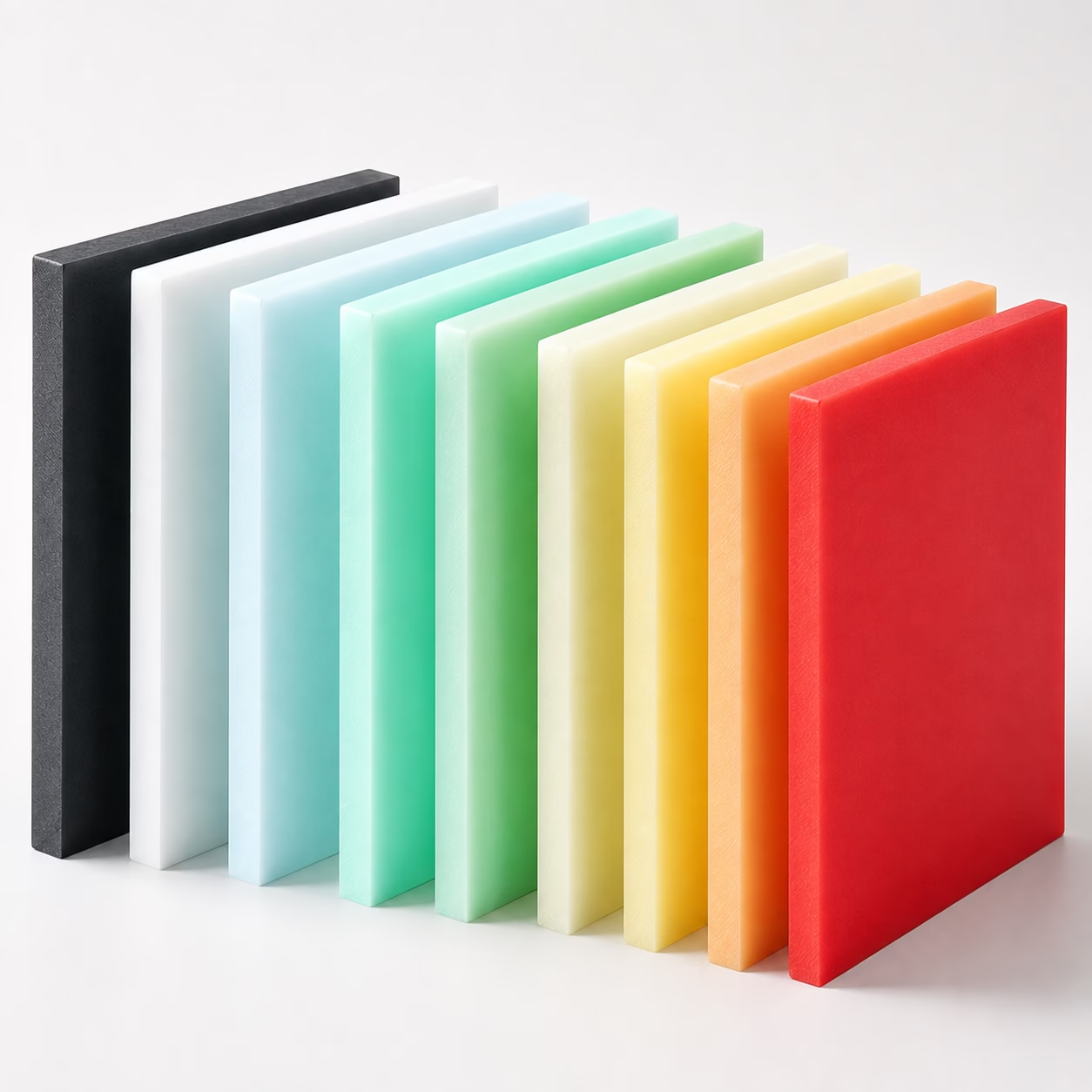
Custom Engineering Plastic Sheet Supply
PE Sheet
PE Sheet, also called polyethylene sheet or PE sheet, is a thermoplastic sheet material valued for low water absorption, chemical resistance, impact toughness, light weight and practical machinability. Different polyethylene grades can provide different density, stiffness, temperature response and surface characteristics.
Guangzhou Huayun Manufacturing can review PE sheet requirements from a drawing, physical sample, target thickness or finished-part application. HDPE and LDPE directions, sheet thickness, sheet size, color, cutting, drilling, machining, surface condition and packing can be discussed before quotation and production.
- ✓ HDPE reference direction: higher-density polyethylene with good chemical resistance, impact toughness and low water absorption.
- ✓ LDPE reference direction: lower-density polyethylene with greater flexibility and good low-temperature softness.
- ✓ Reference sheet size shown in the supplied material tables is 4 ft × 8 ft, with thickness ranges varying by material and color.
- ✓ White, black and milky-white material directions are shown in the references; custom requirements can be reviewed separately.
What Is PE Sheet?
PE Sheet is a polyethylene engineering-plastic material supplied in different density and formulation directions, including HDPE and LDPE.
HDPE is commonly selected where higher stiffness, chemical resistance, impact toughness, low moisture uptake and easy fabrication are important. LDPE is a lower-density direction with greater flexibility, low water absorption and good softness at low temperature.
The correct grade should be selected from the actual operating environment, temperature range, loading, chemical exposure, surface requirement, dimensional tolerance and any project-specific compliance requirement. Reference property values are useful for comparison, but the ordered grade and approved technical data should control final engineering decisions.
Product Attributes
- Product
- PE Sheet
- Other Names
- Polyethylene sheet, PE board, polyethylene board, HDPE sheet and LDPE sheet depending on the selected grade.
- Material
- Polyethylene. HDPE and LDPE are the main reference directions covered on this page.
- HDPE Density
- Reference value: 0.95 g/cm³ by ISO 1183 for the HDPE/LH901 material table supplied for comparison.
- HDPE Water Absorption
- Reference value: 0.5% by ISO 62 in the supplied HDPE material table.
- HDPE Mechanical Reference
- Tensile yield strength 27 MPa, yield elongation 18%, tensile strength at break 5 MPa, elongation at break ≥70%, notched impact strength 20 kJ/m² and elastic modulus 1040 MPa in the supplied reference table.
- HDPE Thermal Reference
- Vicat heat resistance 80°C, heat-deflection temperature 69°C, thermal conductivity 0.42 W/(m·K), reference melting point 130°C, maximum use temperature 90°C and minimum use temperature -50°C in the supplied material table.
- LDPE Density
- Reference value: 0.923 g/cm³ by ASTM D1505 in the supplied LDPE material table.
- LDPE Thermal Reference
- Reference melting point 110°C, Vicat softening point 97°C, low-temperature brittleness below -70°C and heat-deflection temperature 49°C in the supplied material table.
- HDPE White Sheet
- Reference size: 4 ft × 8 ft. Listed thicknesses: 1, 1.5, 2, 2.5, 3, 4, 5, 6, 8, 10, 12, 15, 20, 25, 30, 35, 40, 45, 50, 60, 80 and 100 mm. Thicker sizes should be confirmed separately.
- HDPE Black Sheet
- Reference size: 4 ft × 8 ft. Listed thicknesses: 1, 1.5, 2, 2.5, 3, 4, 5, 6, 8, 10, 12, 15, 20, 25 and 30 mm. Thicker sizes should be confirmed separately.
- LDPE Sheet
- Reference size: 4 ft × 8 ft, milky white. Listed thicknesses: 1, 2, 3, 4 and 5 mm.
- Key Characteristics
- Low water absorption, chemical resistance, impact toughness, light weight, low surface adhesion and practical cutting or machining behavior. Exact performance varies by PE grade.
- Applications
- Industrial liners, cutting surfaces where the selected grade meets project requirements, guides, pads, mechanical components, chemical-handling parts, fabricated panels and general engineering-plastic applications.
PE Sheet Custom Service
PE sheet selection should begin with the application rather than thickness alone. HDPE and LDPE differ in density, stiffness, flexibility and temperature response, so the operating environment, chemical exposure, loading, fastening method and machining requirement should be reviewed together.
Guangzhou Huayun Manufacturing can review an existing PE sheet sample, drawing or finished-part specification for material direction, thickness, sheet size, color, surface condition, cut size, hole position and machining requirement. Where a particular property or compliance document is important, the required test method or standard should be stated before quotation.
Reference tables from different material grades can show different temperature and mechanical values. For that reason, the figures listed on this page are presented as comparison data rather than universal guarantees for every PE sheet. The final approved grade and its technical documentation should be used for production acceptance.
HDPE and LDPE Technical Reference Tables
The values below reproduce the useful data shown in the supplied HDPE/LH901 and LDPE reference sheets. They are grade-specific comparison values, not universal guaranteed values for every PE material. Final purchasing specifications should be confirmed against the selected grade and approved technical documentation.
PE Sheet Size and Thickness Reference
Reference dimensions shown in the supplied material-size tables. Non-standard sizes and thicker material should be confirmed separately.
| Material Direction | Color | Reference Sheet Size | Listed Thicknesses |
|---|---|---|---|
| HDPE Sheet | White | 4 ft × 8 ft | 1, 1.5, 2, 2.5, 3, 4, 5, 6, 8, 10, 12, 15, 20, 25, 30, 35, 40, 45, 50, 60, 80, 100 mm |
| HDPE Sheet | Black | 4 ft × 8 ft | 1, 1.5, 2, 2.5, 3, 4, 5, 6, 8, 10, 12, 15, 20, 25, 30 mm |
| LDPE Sheet | Milky White | 4 ft × 8 ft | 1, 2, 3, 4, 5 mm |
HDPE Physical Properties Reference
Reference data shown for the HDPE/LH901 material sheet.
| Property | Test Method | Reference Value |
|---|---|---|
| Specific Gravity | ISO 1183 | 0.95 g/cm³ |
| Water Absorption | ISO 62 | 0.5% |
| Moisture Rate | ISO 62 | 0.01% |
| Maximum Use Temperature | UL 746B | 90°C |
| Minimum Use Temperature | — | -50°C |
HDPE Mechanical Properties Reference
Selected mechanical values from the supplied HDPE/LH901 table.
| Property | Test Method | Reference Value |
|---|---|---|
| Tensile Yield Strength | ISO 527 | 27 MPa |
| Elongation at Yield | ISO 527 | 18% |
| Tensile Strength at Break | ISO 527 | 5 MPa |
| Elongation at Break | ISO 527 | ≥70% |
| Impact Strength | ISO 179 | O.B. |
| Notched Impact Strength | ISO 179 | 20 kJ/m² |
| Elastic Modulus | ISO 527 | 1040 MPa |
HDPE Thermal and Electrical Properties Reference
Selected thermal and electrical values from the supplied HDPE/LH901 table.
| Property | Test Method | Reference Value |
|---|---|---|
| Vicat Heat Resistance | ISO 306 | 80°C |
| Heat Deflection Temperature | ISO 75 | 69°C |
| Thermal Conductivity | ISO 22007-4 | 0.42 W/(m·K) |
| Glass Transition Temperature | DIN EN ISO 3146 | -110°C |
| Melting Point | DIN EN ISO 3146 | 130°C |
| Volume Resistance | IEC 60093 | >10¹³ Ω·cm |
| Surface Resistance | IEC 60093 | >10¹³ Ω |
| Dielectric Strength | IEC 60243-1 | 45 kV/mm |
LDPE Physical Properties Reference
Reference values shown in the supplied low-density polyethylene material sheet.
| Property | Test Method | Reference Value |
|---|---|---|
| Melting Point | ASTM APC Method | 110°C |
| Melt Flow Index | ASTM D1238 | 2 g/10 min |
| Density | ASTM D1505 | 0.923 g/cm³ |
| Haze | ASTM D1003 | 5.0% |
| Gloss | ASTM D523 | 120% |
LDPE Mechanical Reference Data
Several values in the supplied LDPE table are identified for thin-film or film specimens. They are included as source reference data and should not be treated as guaranteed PE Sheet values without grade-specific confirmation.
| Property | Test Method | Reference Value |
|---|---|---|
| Impact Strength | ASTM D1709 | 90 g, 50% Failure |
| Coefficient of Friction | ASTM D1894 | <0.11 |
| Tensile Strength at Break — Thin Film | ASTM D882 | 240 kg/cm² |
| Tensile Strength at Break — Film | ASTM D882 | 180 kg/cm² |
| 1% Secant Modulus — Thin Film | ASTM D882 | 1970 kg/cm² |
| 1% Secant Modulus — Film | ASTM D882 | 2250 kg/cm² |
| Elongation — Thin Film | ASTM D882 | 320% |
| Elongation — Film | ASTM D882 | 540% |
| Tear Strength — Thin Film | ASTM D1922 | 90 kg/cm |
| Tear Strength — Film | ASTM D1922 | 70 kg/cm |
LDPE Thermal Properties Reference
Reference thermal values shown in the supplied LDPE material sheet.
| Property | Test Method | Reference Value |
|---|---|---|
| Low-Temperature Brittleness | ASTM D746 | <-70°C |
| Vicat Softening Point | ASTM D1525 | 97°C |
| Shore Hardness | ASTM D2240 | 52 |
| Heat Deflection Temperature | ASTM D648 | 49°C |
Specifications That Can Be Reviewed During Development
The final PE sheet specification should be confirmed according to the material grade, thickness, finished-part drawing, application environment and processing requirement.
Material Grade
Review HDPE, LDPE or another polyethylene direction according to stiffness, flexibility, impact, chemical and temperature requirements.
Thickness and Sheet Size
Confirm standard sheet size, target thickness, cut-to-size dimensions and dimensional tolerance before production.
Color and Surface
Review white, black, milky-white or another required color together with the expected surface condition and visible appearance.
Cutting and Machining
Cutting, drilling, routing, CNC machining, holes, slots and finished-part requirements can be reviewed from drawings where applicable.
Common Applications for PE Sheet
PE sheet is used where low moisture uptake, chemical resistance, impact toughness, low surface adhesion, easy cleaning or machinability are useful. The selected grade should match the actual operating conditions.
Industrial Liners and Guides
Wear surfaces, guide plates, low-adhesion liners and equipment components where polyethylene is suitable for the load and operating environment.
Cutting and Work Surfaces
Cutting-board and work-surface applications can be reviewed when the selected material grade and any required compliance documentation match the project.
Mechanical Components
Gears, pads, spacers, blocks, supports and machined parts where light weight, toughness and low moisture absorption are useful.
Chemical and Wet Environments
Panels, fabricated parts and protective components exposed to many common chemicals or moisture, subject to compatibility review for the specific medium.
Fabricated Panels
Cut, drilled or machined polyethylene panels for equipment, enclosures, fixtures, guards and other general industrial assemblies.
General Engineering Use
Custom PE sheet parts for machinery, processing equipment, transport, packaging, construction and other projects that need practical thermoplastic fabrication.
PE Sheet Development and Supply Process
From requirement confirmation to material selection, sheet preparation, dimensional review, processing and packing, the final supply is arranged around the approved specification.
Confirm Requirement
Confirm PE grade direction, thickness, sheet size, color, application, quantity, machining and packing requirements.
Material Selection
Review HDPE, LDPE or another polyethylene direction against stiffness, flexibility, chemical, temperature and fabrication needs.
Sheet Preparation
Prepare the sheet construction and thickness according to the confirmed material grade and approved supply specification.
Size and Surface Review
Check sheet dimensions, thickness, flatness, color and visible surface condition before further processing or packing.
Cutting or Machining
Arrange cut-to-size, holes, slots or machining according to the approved drawing when finished-part processing is required.
Packing and Delivery
Confirm protective packing, labels, quantity, pallet or carton requirements and shipment information before dispatch.
What Should Be Confirmed Before Batch Supply?
Material grade, dimensions, surface condition and any project-specific property requirements should be confirmed before repeat supply.
Material and Dimension Approval
An approved material specification or sample gives purchasing and production teams a practical reference for repeat orders.
- HDPE or LDPE direction
- Thickness
- Sheet size
- Color
- Surface condition
- Dimensional tolerance
- Cut or machined geometry
- Packing method
Application-Specific Review
Where the final use depends on a specific property, the required test method, value, compliance document and acceptance criteria should be stated before the production specification is finalized.
- Operating temperature
- Chemical exposure
- Mechanical loading
- Impact requirement
- Electrical requirement
- Application compliance
What Information Is Needed for a PE Sheet Quote?
For a practical quotation, please send the material direction, thickness, sheet size, color, quantity and application together whenever possible. If cut-to-size or machining is required, include a drawing with dimensions, holes, slots, tolerances and quantity.
PE Sheet Buyer and Technical FAQs
Questions commonly reviewed by purchasing, engineering and product-development teams before material selection, machining and repeat supply.
What is PE Sheet?
PE Sheet is polyethylene engineering-plastic sheet material. Common grade directions include HDPE and LDPE, which differ in density, stiffness, flexibility and temperature response.
What is the difference between HDPE and LDPE sheet?
HDPE is the higher-density direction and is commonly chosen for greater stiffness, chemical resistance and impact toughness. LDPE is lower in density and generally provides greater flexibility and low-temperature softness. The correct choice depends on the actual application.
What reference density values are shown for HDPE and LDPE?
The supplied material tables show 0.95 g/cm³ for the HDPE/LH901 reference and 0.923 g/cm³ for the LDPE reference. These are material-reference values and should not be treated as a universal value for every PE grade.
What HDPE sheet sizes and thicknesses are shown in the supplied reference?
The reference shows 4 ft × 8 ft white and black HDPE sheets. White sheet is listed from 1 mm through 100 mm at specified thickness steps, while black sheet is listed from 1 mm through 30 mm at specified thickness steps. Thicker or non-standard sizes should be confirmed separately.
What LDPE sheet sizes are shown in the supplied reference?
The supplied LDPE size table shows milky-white 4 ft × 8 ft sheet in 1, 2, 3, 4 and 5 mm thicknesses.
What material properties are useful when selecting PE Sheet?
Purchasing and engineering teams commonly review density, water absorption, impact behavior, stiffness, temperature response, chemical compatibility, electrical behavior and machinability. The required values should be tied to the selected material grade and test method.
Can PE Sheet be cut or machined to a drawing?
Cut-to-size, holes, slots and machined features can be reviewed from a drawing. Please provide overall dimensions, thickness, tolerance, hole positions, quantity and finished-part application before quotation.
Can PE Sheet be used for cutting-board or food-processing applications?
Polyethylene is used in cutting-board and food-processing applications, but the specific material grade and any required food-contact compliance documentation must be confirmed for the project before supply.
What information should our purchasing team send for a quotation?
Please send the required PE grade, thickness, sheet size, color, quantity, application, operating environment, machining requirement and packing preference, plus drawings or a physical sample whenever available.
What should be approved before batch supply?
The approved specification should confirm material grade, dimensions, thickness tolerance, color, surface condition, machined geometry, required property documentation and packing. For repeat orders, these details should remain part of the purchasing specification.